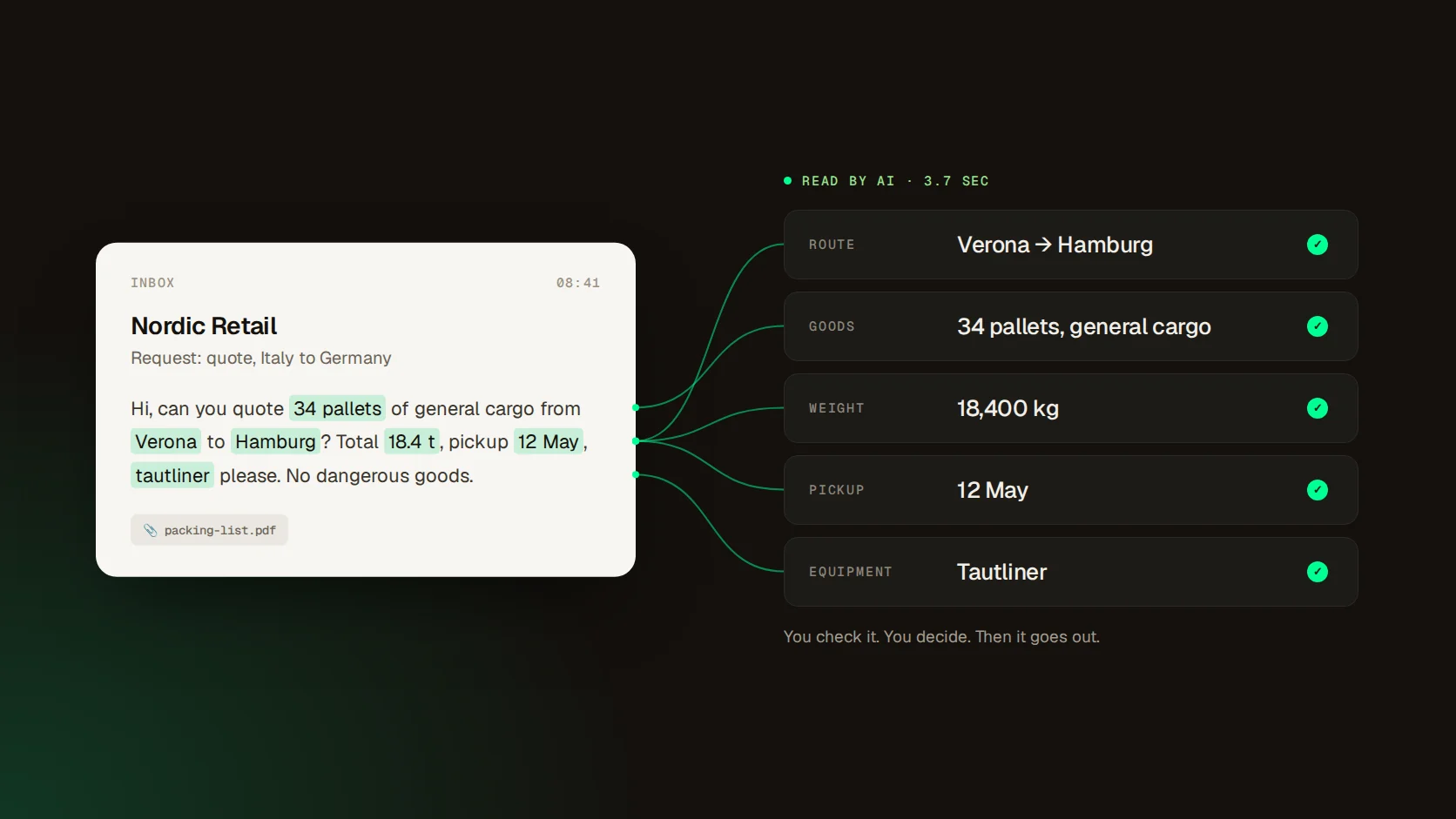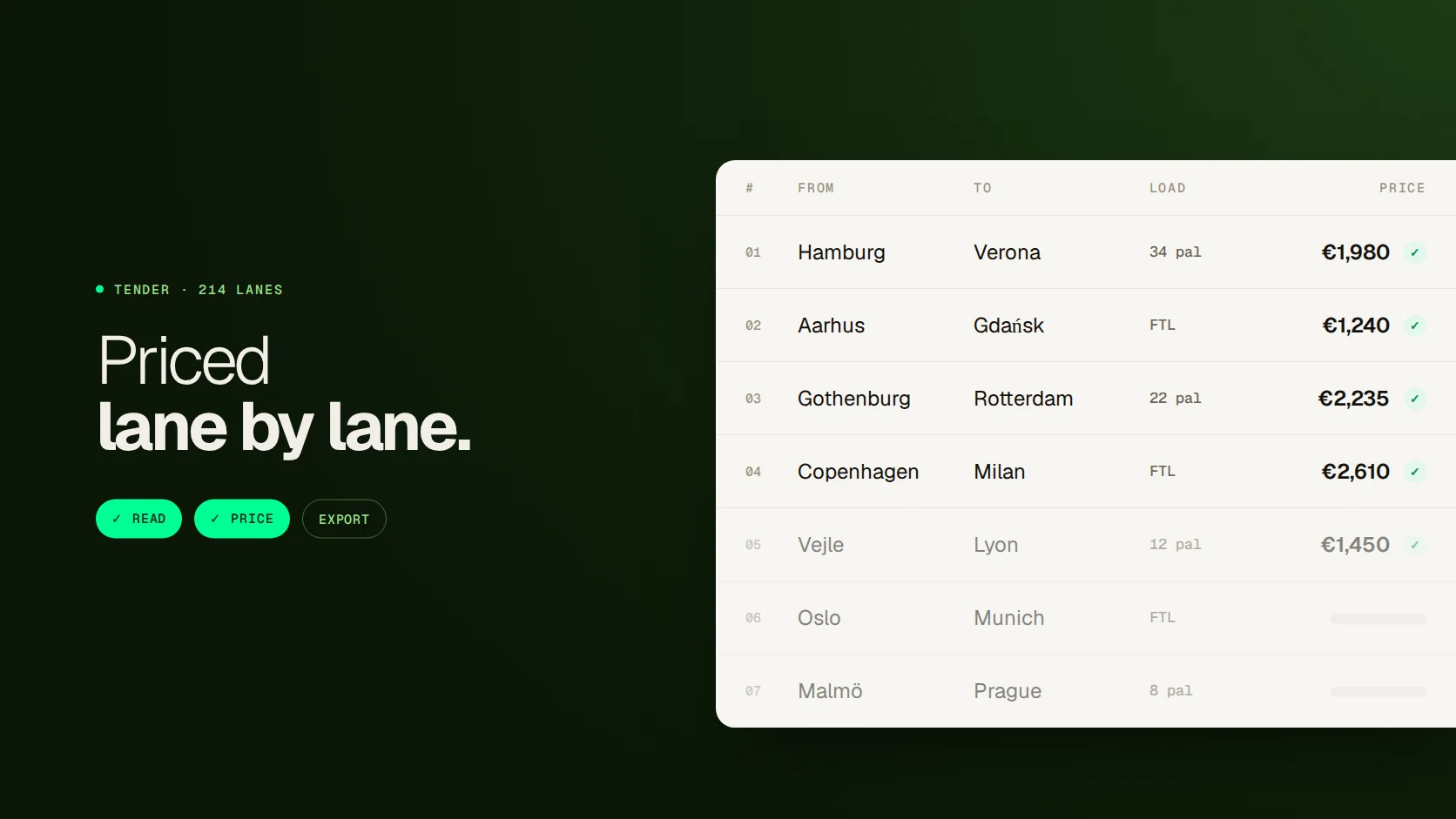
Ask a dispatcher what a lane costs, and the answer is often "it depends." That is not evasion. It is the reality when prices come from several sources at once.
Two kinds of price
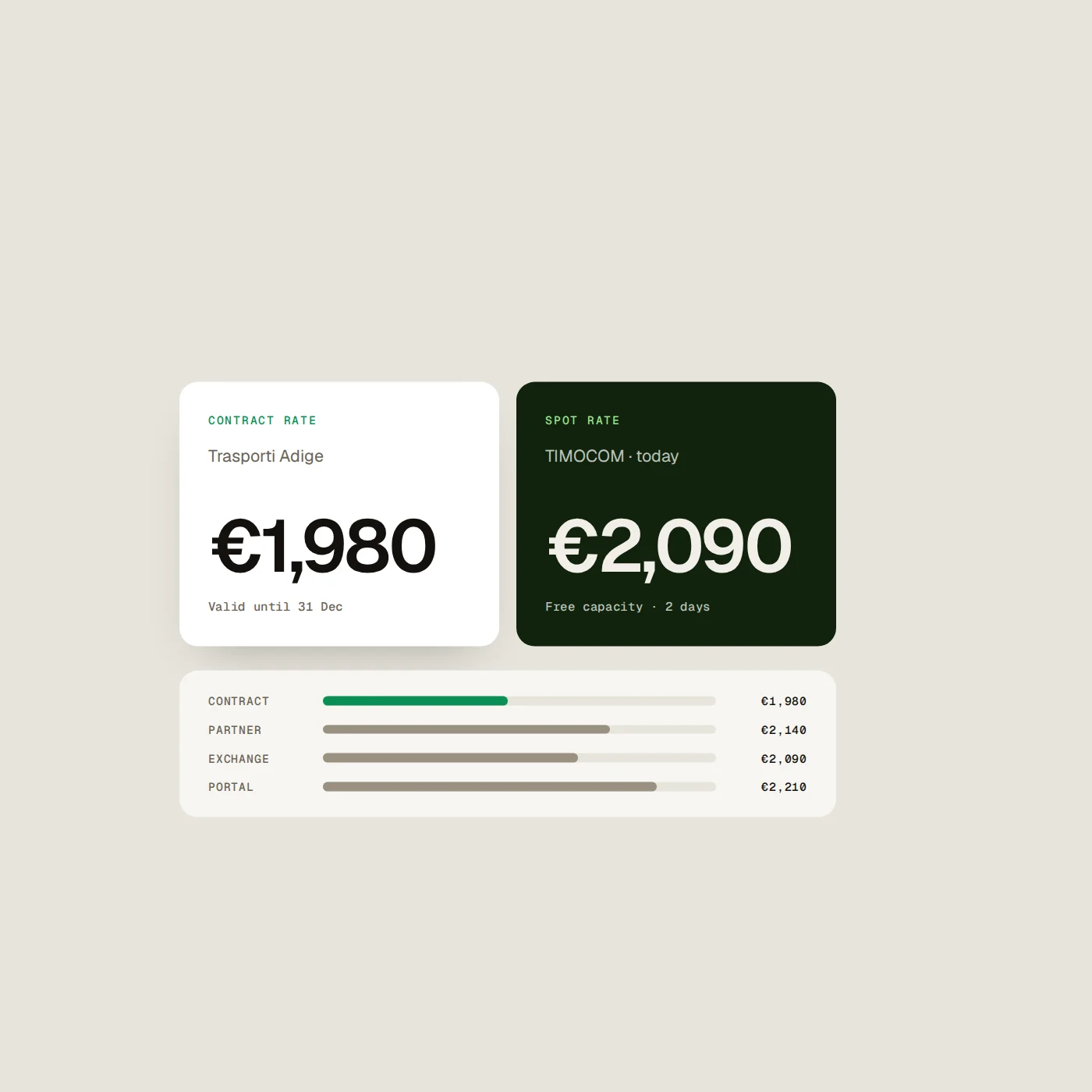
Contract rates are agreed in advance with a carrier or partner for a period. They give both sides predictability and are typically used on lanes with steady volume.
Spot rates are one-off prices for a single shipment, based on the market right now. They come from partners, freight exchanges or portals when there is no agreement, or when the agreement does not fit the shipment.
Most forwarders use both every day. Choosing between them is not the hard part. Knowing when which price is the right one is.
When the contract rate is not enough
A contract rate is not always the best answer, even when one exists:
- The shipment does not fit the agreement. The weight, the equipment or the pickup date falls outside what the contract covers.
- The market has moved. When there is spare capacity, a spot rate can be lower than the agreed one. When it is busy, the partner cannot always deliver at the contract rate.
- The customer wants an answer now. If the contracted partner is slow to confirm, another source may be the better choice.
The practical problem: prices are scattered
Even when you know what you are looking for, the prices live in many places. Contract rates in Excel sheets, partner prices in old emails and spot rates on freight exchanges. Each source has to be checked on its own, and currency, surcharges and validity make them hard to compare directly.
The result is that the price the customer gets often depends on who looked where, and how much time they had.
A simple rule of thumb
Always start with your own agreements, and let the market fill the gaps:
- Find the most precise valid contract rate for the shipment, if there is one.
- Check the preferred partners on the lane.
- Compare with the market, so you know whether the contract rate is still competitive.
When every price sits side by side in the same format, the choice becomes quick and well-founded. Read about how Fragta gathers prices from every source.

Send us a real enquiry and we’ll walk you through the full quote in 30 minutes.